Boost Your Immune System Naturally During Seasonal Changes: A Complete Guide
Seasonal changes can challenge your body in unexpected ways. From cold winter air to humid spring days, these transitions often make you more vulnerable to colds, flu, and other illnesses.
The good news? Your immune system is incredibly powerful—and with the right habits, you can strengthen it naturally and stay healthy all year round.
In this guide, you’ll discover why seasonal changes affect your immunity and the best natural ways to boost your immune system effectively.
Why Seasonal Changes Affect Your Immune System
Your immune system works constantly to defend your body against harmful bacteria and viruses. However, environmental and lifestyle changes during different seasons can weaken this defense.
1. Temperature Fluctuations
Colder weather often means spending more time indoors with dry air. This can dry out your nasal passages and throat, making it easier for germs to enter your body.
2. Reduced Sunlight Exposure
Shorter days can lead to lower levels of Vitamin D, a key nutrient that supports immune function.
3. Seasonal Allergens
Pollen, mold, and other allergens can trigger immune responses, putting extra stress on your system.
4. Stress and Busy Schedules
Seasonal transitions often come with lifestyle changes, increased workload, or travel—all of which can weaken your immunity.
Natural Ways to Boost Your Immune System

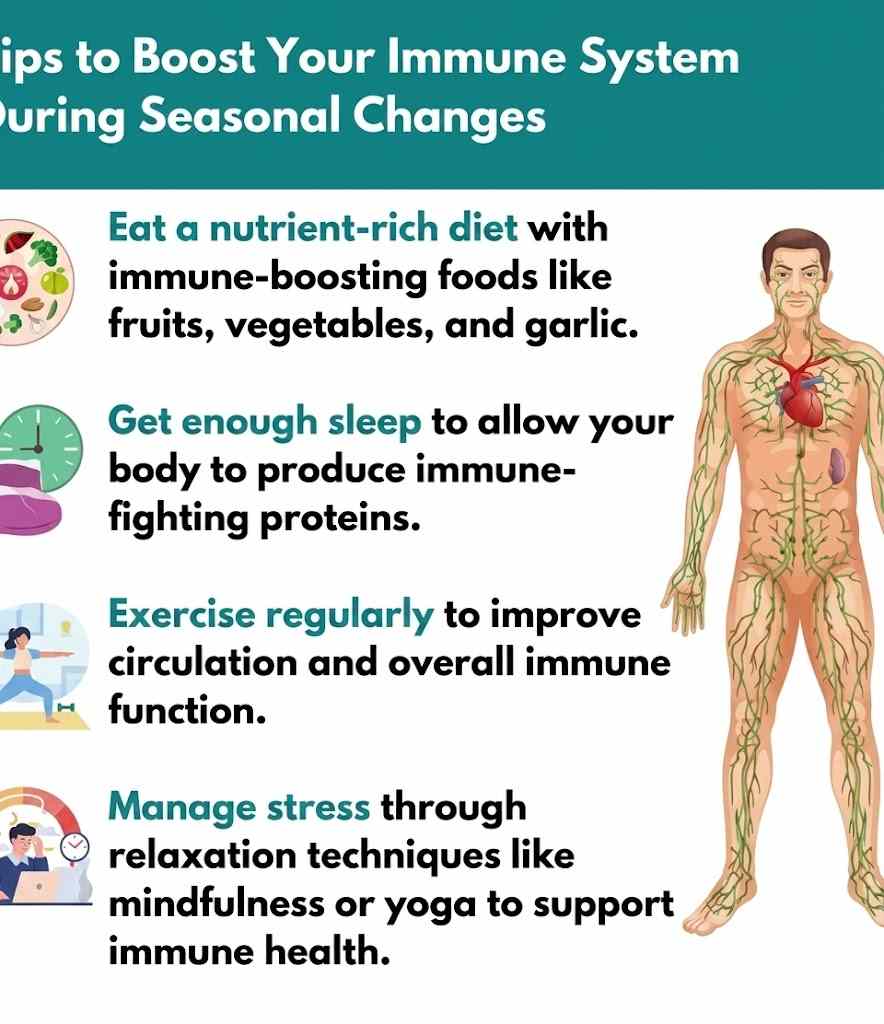
Making small, consistent lifestyle changes can significantly improve your body’s ability to fight illness.boosting-seasonal-immunity-for-colds-flu-and-weather-changes
1. Eat a Nutrient-Rich, Balanced Diet
A strong immune system starts with proper nutrition. Focus on foods rich in vitamins, minerals, and antioxidants.
Key immune-boosting foods include:
- Vitamin C foods: Oranges, lemons, bell peppers, broccoli, spinach
- Garlic: Supports white blood cell activity
- Ginger & turmeric: Powerful anti-inflammatory properties
- Probiotic foods: Yogurt, kefir, kimchi for gut health
- Nuts & seeds: Rich in Vitamin E, zinc, and healthy fats
Tip: Eat a variety of colorful fruits and vegetables to ensure a wide range of nutrients.
2. Prioritize Quality Sleep
Sleep is essential for immune health. During sleep, your body produces proteins called cytokines that help fight infection and inflammation.
Tips for better sleep:
- Aim for 7–9 hours per night
- Stick to a consistent sleep schedule
- Avoid screens at least 1 hour before bedtime
- Create a relaxing bedtime routine
3. Exercise Regularly
Moderate physical activity helps:
- Improve blood circulation
- Reduce stress
- Strengthen immune response
Best options:
- Walking
- Jogging
- Swimming
- Yoga
Aim for at least 30 minutes most days of the week.
4. Stay Hydrated
Water plays a crucial role in:
- Transporting nutrients
- Removing toxins
- Supporting immune cell function
Hydration tips:
- Drink water consistently throughout the day
- Include herbal teas and infused water
- Eat water-rich foods like cucumbers, oranges, and watermelon
5. Manage Stress Effectively
Chronic stress can weaken your immune system and increase your risk of illness.
Simple stress management techniques:
- Meditation and mindfulness (10–15 minutes daily)
- Deep breathing exercises
- Yoga or gentle stretching
Taking time to relax is essential—not optional—for good health.
6. Maintain Healthy Vitamin D Levels
Vitamin D is crucial for immune defense, especially when sunlight exposure is limited.
Sources of Vitamin D:
- Sunlight
- Fatty fish (salmon, mackerel)
- Egg yolks
- Fortified dairy products
Consider supplements if needed (consult a healthcare professional first).
7. Consider Herbal Support
Certain herbs may help strengthen your immune system:
- Echinacea: May reduce cold severity
- Elderberry: Known for antiviral properties
- Astragalus: Supports immune function
Always consult a healthcare provider before using supplements, especially if you take medications.
Build Immunity for Long-Term Health
Seasonal changes are unavoidable, but illness doesn’t have to be. By adopting healthy daily habits—balanced nutrition, good sleep, regular exercise, and stress management—you can significantly strengthen your immune system.
Consistency is key. Even small improvements in your lifestyle can lead to lasting health benefits.
Conclusion
Your immune system is your body’s first line of defense. Supporting it naturally during seasonal transitions helps you stay energized, resilient, and protected against common illnesses.
Start with simple steps today, and your body will thank you in every season.
Disclaimer
This article is for informational purposes only and does not replace professional medical advice. Always consult a qualified healthcare provider for personalized recommendations.
Leave a Reply