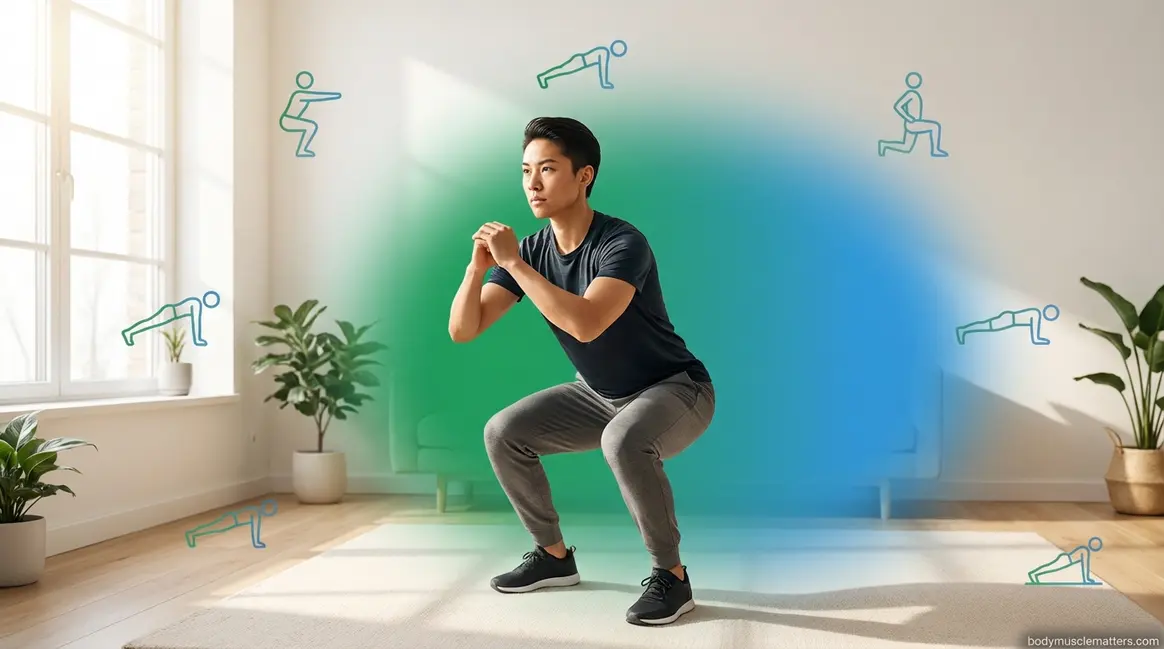
Home Workouts Without Equipment: A Beginner’s 4-Week Plan for Real Results
Medical Disclaimer
This article is for educational purposes only and does not replace professional medical advice. Always consult a healthcare provider or certified fitness trainer before starting a new exercise program, especially if you have injuries or health conditions.Introduction: Start Your Fitness Journey at Home
If you’re new to fitness and feel overwhelmed by gym routines or expensive equipment, you’re not alone. Many beginners struggle with inconsistent workouts, lack of structure, and zero progress.
This guide solves that.
You’ll get a complete 4-week home workout plan with no equipment, designed specifically for beginners. It’s simple, progressive, and built around five essential bodyweight exercises that target your entire body.
No gym. No experience. Just results.
Why Home Workouts Without Equipment Work
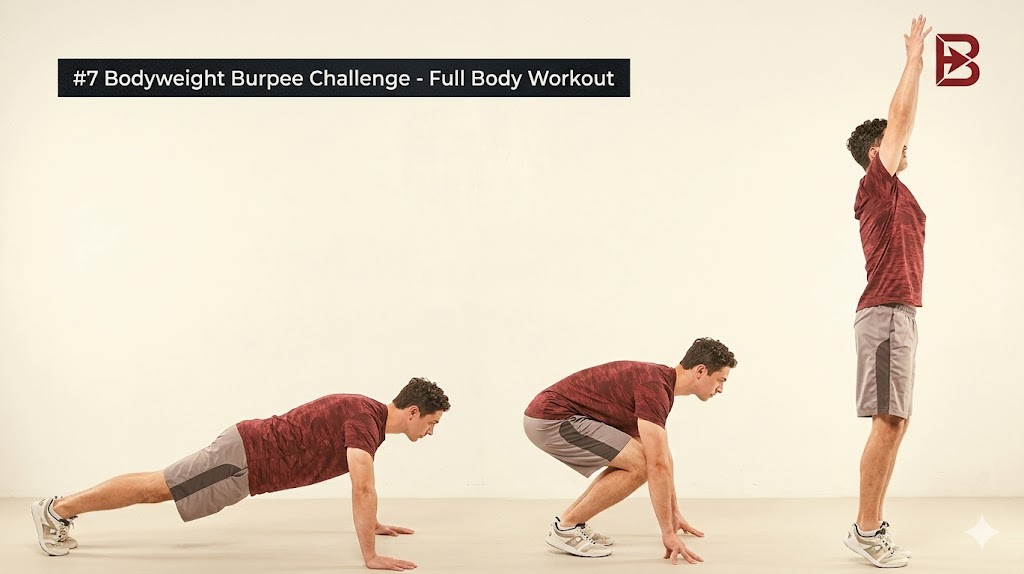
Research shows that bodyweight training can significantly improve strength and cardiovascular fitness, even in previously inactive individuals. The key is consistency and progression, not complexity.
Key Benefits:
- No cost or equipment required
- Easy to follow at home
- Builds strength, endurance, and mobility
- Saves time (just 20–30 minutes per session)
The Foundation-First Approach
Before chasing goals like fat loss or muscle gain, beginners must master basic movement patterns.
This plan focuses on 5 foundational exercises:
- Squat – lower body strength
- Push-up – upper body and core
- Reverse lunge – balance and stability
- Plank – core strength
- Glute bridge – posterior chain activation
These movements train every major muscle group efficiently.
Warm-Up (2 Minutes Only)
Never skip this step—it reduces injury risk and improves performance.
Quick warm-up routine:
- Arm circles (forward & backward)
- Leg swings
- Hip circles
- Marching in place (30 seconds)
- Inchworms (3–4 reps)
The 5 Essential Exercises
Perform each exercise with control. Rest briefly between movements.
1. Bodyweight Squat
- Reps: 10–12
- Focus: Keep chest up, push hips back
- Common mistake: Knees collapsing inward
2. Push-Up (or Knee Push-Up)
- Reps: 8–10
- Keep your body in a straight line
- Beginner tip: Start with knee push-ups
3. Reverse Lunge
- Reps: 8 each leg
- Step backward to reduce knee stress
- Keep torso upright
4. Plank
- Hold: 20–30 seconds
- Maintain a straight line from head to heels
- Don’t hold your breath
5. Glute Bridge
- Reps: 12–15
- Squeeze glutes at the top
- Avoid arching your lower back
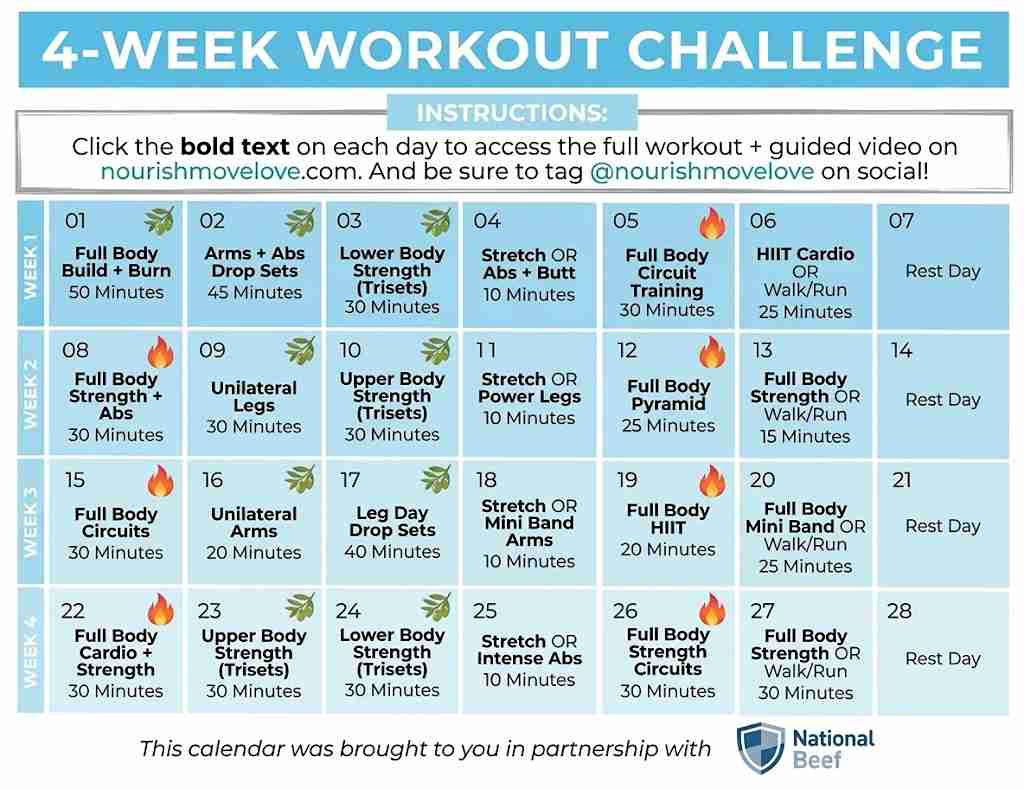
4-Week Beginner Workout Plan
This plan uses progressive overload—gradually increasing difficulty over time.
Week 1–2: Build the Foundation
Goal: Learn proper form and build consistency
- Frequency: 3 days/week
- Rounds: 2–3
- Rest: 30–45 seconds
Tip: Focus on technique, not speed.
Week 3–4: Increase Intensity
Goal: Improve endurance and strength
- Rounds: 3–4
- Rest: 15–20 seconds
- Add more reps
Tip: Shorter rest = higher challenge.
Cool Down (3–5 Minutes)
Help your body recover and reduce soreness.
Stretch routine:
- Standing quad stretch
- Hip flexor stretch
- Hamstring stretch
- Child’s pose
- Cat-cow stretch
Can You Build Muscle Without Equipment?
Yes.
Muscle growth depends on tension and consistency, not just weights.
Progression Tips:
- Increase reps
- Reduce rest time
- Slow down movements
- Try harder variations
Examples:
- Squat → Bulgarian split squat
- Push-up → Diamond push-up
- Glute bridge → Single-leg version
Fat Loss at Home: Simple & Effective
Bodyweight circuits can burn calories and boost metabolism.
Sample Fat-Burning Circuit:
- Jumping jacks – 40 sec
- Squat to calf raise – 12 reps
- Push-ups – 10 reps
- High knees – 30 sec
- Reverse lunges – 8 each leg
- Plank – 30 sec
Repeat 3 rounds.
HIIT for Beginners (Optional After Week 4)
High-Intensity Interval Training is effective—but not for total beginners.
Basic structure:
- 20 seconds work
- 40 seconds rest
- 4–6 rounds
Start only after mastering the basics.
Common Beginner Mistakes
Avoid these to stay on track:
- Skipping warm-ups
- Jumping into advanced workouts
- Ignoring pain signals
- Inconsistent schedule
- Progressing too quickly
How to Build a Workout Habit
Consistency beats intensity.
Proven strategies:
- Schedule workouts like appointments
- Start small (2–3 sessions/week)
- Track completion, not performance
- Prepare your workout space in advance
When to Rest or Stop
Listen to your body.
Stop if you experience:
- Sharp joint pain
- Dizziness or nausea
- Chest discomfort
- Persistent soreness (72+ hours)
Frequently Asked Questions
Is 20 minutes of exercise enough?
Yes. For beginners, 20–30 minutes per session is highly effective.
How often should beginners work out?
Start with 3 times per week.
Do I need equipment to get results?
No. Bodyweight training is enough to build strength and improve fitness.
Start Today — Not Later
You don’t need perfect conditions to begin.
All you need is:
- A small space
- 20 minutes
- Consistency
Start with Day 1, Week 1 today. Build the habit. Follow the plan.
By the end of 4 weeks, you won’t just feel stronger—you’ll have created a lifestyle that lasts.
Conclusion
Home workouts without equipment are one of the simplest and most effective ways to start your fitness journey. With a structured plan, progressive overload, and consistency, beginners can achieve real results without ever stepping into a gym.
Leave a Reply