Introduction
Creating a personalized workout plan is one of the most effective ways to achieve your fitness goals—whether it’s building muscle, losing weight, or improving overall health. In 2026, workout planning has evolved with smarter strategies, structured methods, and the integration of technology to maximize results.
This step-by-step guide will show you how to design a workout plan that is effective, sustainable, and tailored to individual needs.
Key Takeaways
- Start with a clear fitness assessment and defined goals
- Customize workouts based on fitness level and preferences
- Use progressive overload to ensure continuous improvement
- Prioritize recovery, nutrition, and sleep
- Track progress and adjust plans regularly
Why a Well-Designed Workout Plan Matters
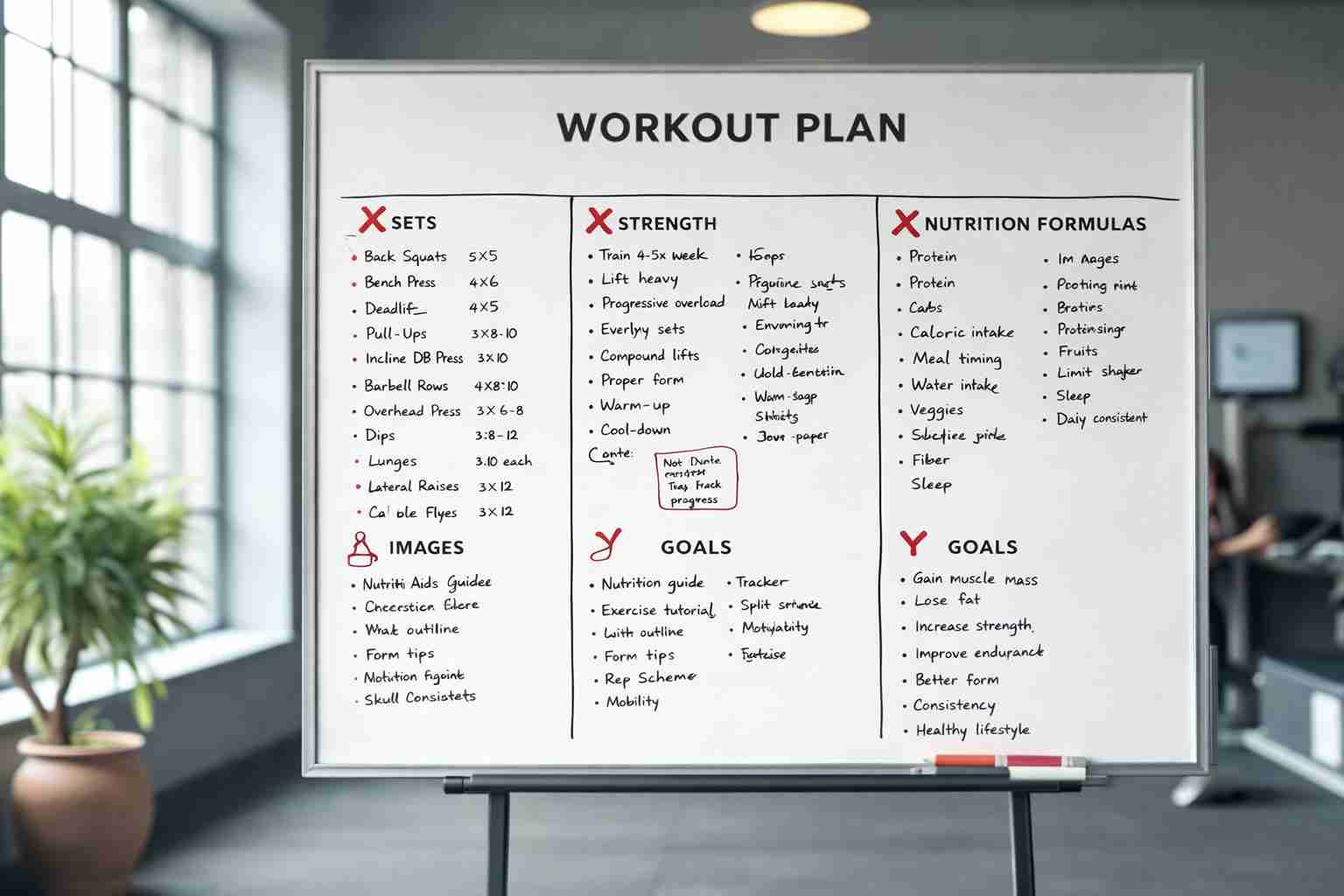
A structured workout plan acts as a roadmap for success. Studies show that individuals who follow a planned routine are significantly more likely to achieve their goals than those who train randomly.
A good plan helps you:
- Stay consistent and motivated
- Track measurable progress
- Reduce injury risk
- Improve performance over time
Without structure, many people quit within the first month due to lack of direction. A clear plan solves this problem by breaking big goals into manageable steps.
Step-by-Step Guide to Creating a Workout Plan
Step 1: Define Goals Using the SMART Method
Start by identifying your primary objective:
- Fat loss
- Muscle gain
- Strength improvement
- Endurance
Use the SMART framework:
- Specific: “Lose 5kg”
- Measurable: Track weight or strength
- Achievable: Realistic timeline
- Relevant: Matches your lifestyle
- Time-bound: Set a deadline
Step 2: Assess Your Fitness Level
Evaluate your current condition:
- Strength (e.g., push-ups, squats)
- Endurance (cardio capacity)
- Flexibility
- Body composition
Beginners should focus on basic movements, while advanced individuals can handle more complex routines.
Step 3: Choose the Right Workout Split
Your workout split determines how you organize training days.
Popular Workout Splits
1. Full-Body Split (2–3 days/week)
- Best for beginners
- Trains all muscle groups each session
2. Upper/Lower Split (4 days/week)
- Balanced approach
- Alternates upper and lower body
3. Push/Pull/Legs Split (3–6 days/week)
- Ideal for advanced lifters
- Focuses on movement patterns
Step 4: Select Effective Exercises
Focus on a mix of:
- Compound exercises: Squats, deadlifts, bench press
- Isolation exercises: Bicep curls, tricep extensions
Tip: Compound movements should make up about 60% of your routine for maximum efficiency.
Step 5: Set Reps, Sets, and Rest Time
Adjust based on your goal:
- Muscle growth: 3–5 sets × 8–12 reps
- Strength: 3–5 sets × 3–6 reps
- Endurance: 2–4 sets × 12–15 reps
Rest time:
- 30–60 seconds (endurance)
- 2–5 minutes (strength)
Step 6: Add Warm-Up and Cool-Down
A proper routine should include:
Warm-up (5–10 minutes):
- Light cardio
- Dynamic stretching
Cool-down (5–10 minutes):
- Static stretching
- Foam rolling
This helps prevent injuries and improves recovery.
Step 7: Build a Weekly Workout Schedule
Here’s an example:
- Monday: Strength training (full body)
- Tuesday: HIIT cardio
- Wednesday: Active recovery (yoga/walking)
- Thursday: Strength training
- Friday: Cardio endurance
- Saturday: Skill or sport training
- Sunday: Rest
Balance intensity with recovery to avoid burnout.
Step 8: Monitor Progress and Adjust
Track key metrics:
- Weight lifted
- Reps completed
- Body measurements
- Energy levels
Increase intensity gradually (2–5% per week) to ensure continuous improvement.
Step 9: Use Technology for Better Results
In 2026, fitness apps and software make planning easier by:
- Tracking workouts automatically
- Analyzing performance data
- Adjusting routines based on progress
Using these tools helps maintain consistency and accountability.
Pro Tips for an Effective Workout Plan
- Follow the progressive overload principle
- Train 3–5 days per week for optimal results
- Get 7–9 hours of sleep per night
- Stay hydrated and maintain proper nutrition
- Include deload weeks every 6–8 weeks
Common Mistakes to Avoid
- Skipping recovery days
- Poor exercise form
- Lack of consistency
- Not tracking progress
- Setting unrealistic goals
7-Day Gym Workout Plan for Beginners: Optimized for Muscle Gain and Fat LossConclusion
Creating a workout plan in 2026 is no longer about guessing—it’s about using structured strategies, personalization, and smart tracking.
By following this step-by-step guide, you can build a program that fits your lifestyle, keeps you motivated, and delivers real results.
Leave a Reply