
How to Read and Use the Nutrition Facts Label (Complete Beginner’s Guide)
Introduction
Have you ever looked at a food label and felt confused by all the numbers and percentages?
You’re not alone. The Nutrition Facts label is designed to help you make healthier food choices—but only if you know how to read it correctly.
In this guide, you’ll learn how to understand and use the Nutrition Facts label step by step, so you can make smarter decisions for your health every day.
What Is the Nutrition Facts Label?
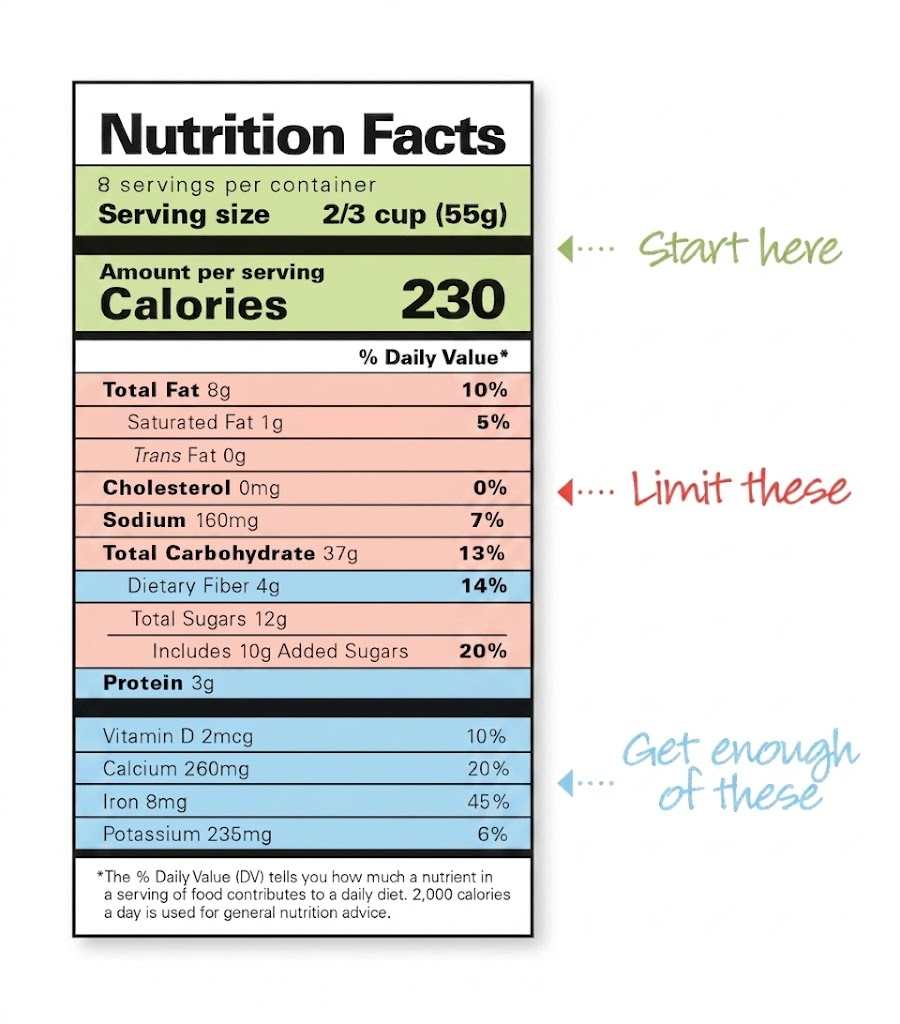
The Nutrition Facts label provides key information about a food product, including:
- Serving size
- Calories
- Nutrients
- Percent Daily Value (%DV)
Its main purpose is to help you compare foods and choose a balanced diet.
1. Start with Serving Size
The first thing to check is the serving size and servings per container.
Why it matters:
All the numbers on the label are based on one serving.
Example:
- 1 serving = 1 cup
- If you eat 2 cups → you consume double the calories and nutrients
Always ask yourself: How many servings am I actually eating?
2. Check the Calories
Calories tell you how much energy you get from one serving.
- 1 serving: 280 calories
- 2 servings: 560 calories
Key tip:
Balance the calories you eat with the calories you burn.
Eating too many calories over time can lead to weight gain and health issues.
3. Understand Key Nutrients
Nutrients to Limit
These are nutrients you should consume in moderation:
- Saturated fat
- Sodium (salt)
- Added sugars
High intake may increase the risk of:
- Heart disease
- High blood pressure
- Obesity
Added Sugars vs Total Sugars
- Total sugars: Natural + added sugars
- Added sugars: Sugars added during processing
Example:
- Total sugars = 15g
- Added sugars = 7g
Lower added sugar = healthier choice
Nutrients to Get More Of
These nutrients are often lacking in modern diets:
- Dietary fiber
- Vitamin D
- Calcium
- Iron
- Potassium
These support:
- Digestion
- Bone health
- Blood pressure control
4. Use the Percent Daily Value (%DV)
The % Daily Value (%DV) shows how much a nutrient contributes to your daily diet.
Quick guide:
- 5% DV or less → Low
- 20% DV or more → High
How to use it:
- Choose foods higher in fiber, vitamins, minerals
- Choose foods lower in saturated fat, sodium, added sugar
Example: Sodium
- 37% DV sodium = high
- Eating 2 servings = 74% DV
That’s almost a full day’s limit in one meal!
5. Make Smart Food Comparisons
Use the label to compare similar products.
Example:
- Product A: 10% sodium
- Product B: 25% sodium
Choose Product A for a healthier option.
6. Understand Daily Values (DV)
Daily Values are based on a 2,000-calorie diet.
General guidelines:
- Eat less than:
- Saturated fat
- Sodium
- Added sugars
- Eat at least:
- Fiber
- Vitamins and minerals
7. Nutrients Without %DV
Some nutrients don’t always show %DV:
- Trans fat → no safe daily level
- Total sugars → no set limit
- Protein → %DV shown only in specific cases
Still important—just interpret them differently.
8. Special Label Formats You Should Know
Dual-Column Labels
Show nutrition:
- Per serving
- Per entire package
Helpful for foods you might eat in one sitting.
Single-Ingredient Sugar Labels
Used for products like:
- Honey
- Maple syrup
They show %DV for added sugars but not grams of added sugar.
How to Use the Label for Healthier Eating
Simple Strategy:
- Check serving size
- Look at calories
- Limit unhealthy nutrients
- Increase beneficial nutrients
- Use %DV to compare products
Tips for Better Food Choices
- Choose whole, minimally processed foods
- Watch portion sizes
- Avoid high-sodium packaged foods
- Limit added sugars
- Increase fiber intake
Final Thoughts
Understanding the Nutrition Facts label is one of the most powerful tools for improving your diet.
You don’t need to memorize everything—just focus on:
Serving size
Calories
Key nutrients
% Daily Value
With practice, reading food labels becomes quick and easy—and helps you make healthier choices every day.
SEO Meta (Recommended)
- Meta Title: How to Read and Use the Nutrition Facts Label (Beginner Guide)
- Meta Description: Learn how to understand the Nutrition Facts label, including calories, serving size, and %DV to make healthier food choices
- Slug: how-to-read-nutrition-facts-label
Leave a Reply